
Generating Lift
No airfoil can generate lift in isolation.

Admit it. No one likes the middle seat on an airplane. You can’t easily glance to your left or right without wondering if the person next to you thinks you’re trying to watch their movie. So, there you sit, staring at the back of the seat in front of you.
The aisle seat is a much better option. On the aisle, you have easy access to the lavatory, you can stand up and stretch your legs without stumbling over someone’s tray table, and you are guaranteed to have at least one armrest to yourself. However, there is a downside to having that armrest: odds are that your aisle-side elbow becomes a speed bump for the beverage cart.
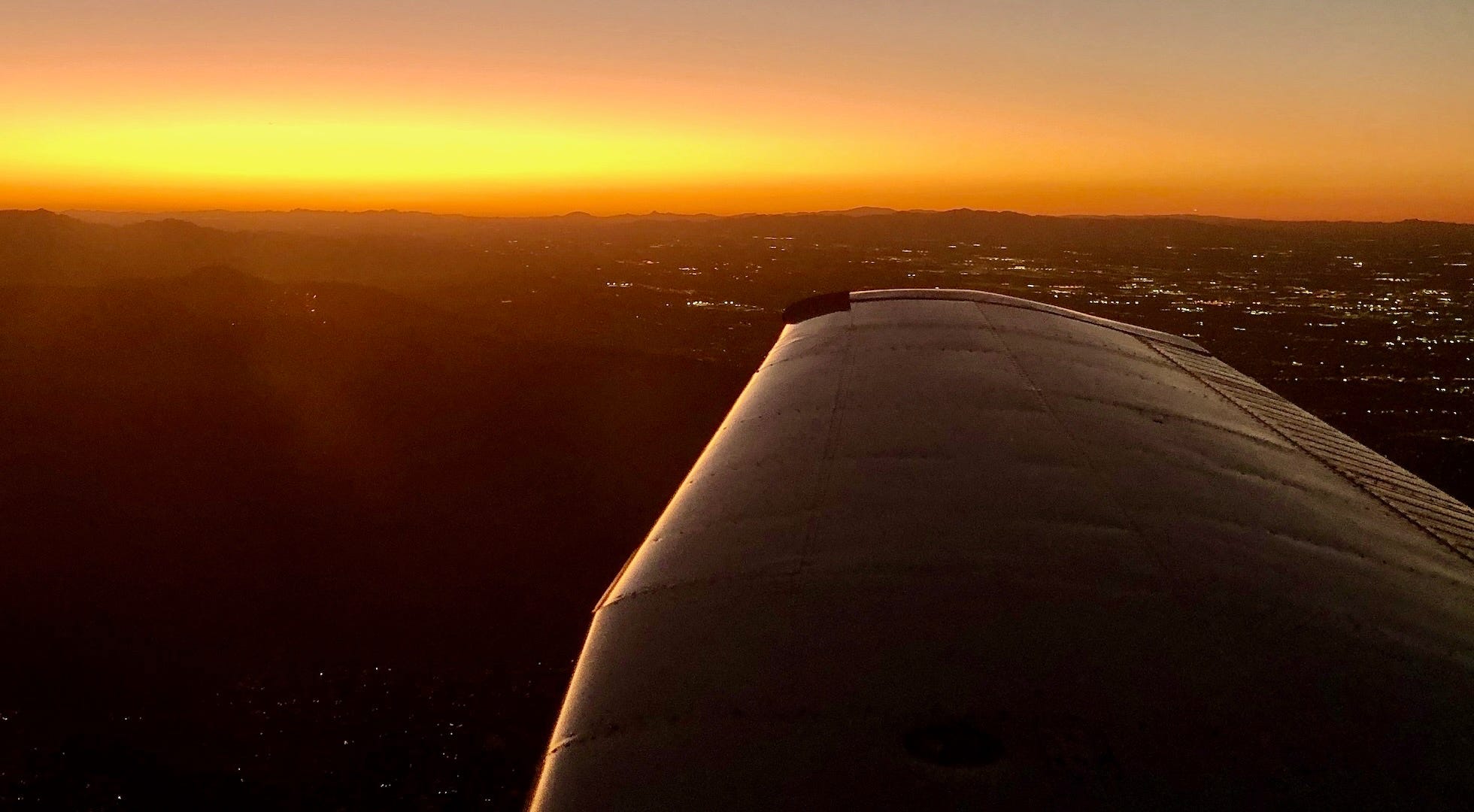
But for my money, other than the spectacular views from the cockpit, I prefer the window seat. Getting out of your seat in flight is a bit more difficult from the window seat, but the views more than make up for the inconvenience. Looking down from 36,000 feet, you can see broken clouds forming vast shadows across the desert or the small, visible wake of a boat racing across a lake on a perfect day. However, and this might be the aerospace engineer in me talking, my favorite view is looking down the surface of the wing during final approach on a misty day. On those days, you can see the water vapor in the air as it flows over the wing and curls into a vortex at the wingtip. On the one hand, I recall my years struggling through engineering lectures on laminar flow, fluid dynamics, and bound layer effects. On the other, I am captivated by the simple elegance of air dancing around the wing, keeping tons of metal, cargo, and humanity aloft. In those moments, I am reminded that science is not merely the sum of complex equations or the practical application of materials to serve a useful purpose, but a way of exploring what is inherently beautiful and magnificent in the created order of our world.
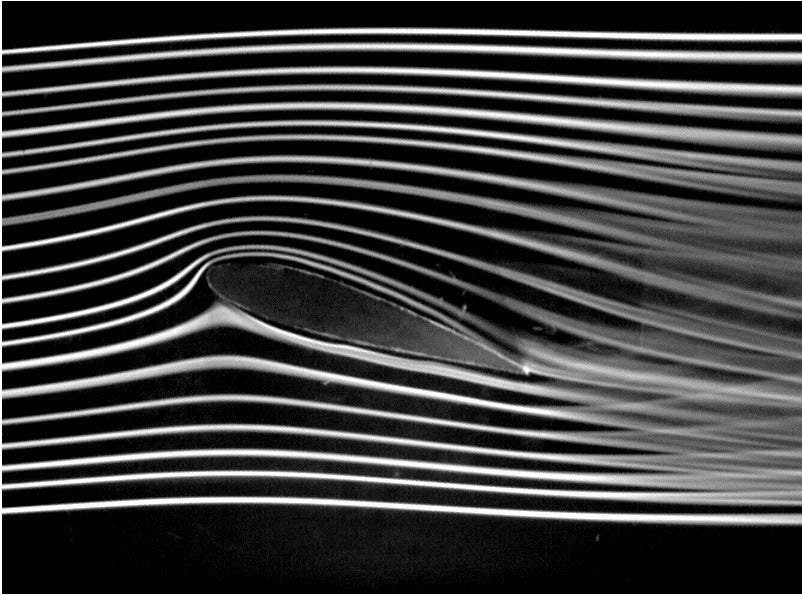
To create lift and keep the wing outside my window suspended in the atmosphere, small particles are separated as they encounter the leading edge of the wing. These molecules were simply minding their own business, hanging out several miles above the Earth on a Saturday evening, when suddenly they were separated by an unexpected aluminum intruder. Now, their lives are upended, and they find themselves detached, parted, and distanced. One molecule races above the metal surface of the wing, while another slugs its way below. Once they leave the leading edge and become trapped in the boundary layer, they have no idea what will happen or how long they will be separated. Will this separation be brief, like passing over the wing of a Cessna 172, or will it take a while, like traversing the airfoil of a Boeing 747 with flaps extended? Regardless of the timing and inherent uncertainty, aerodynamic theory dictates that those particles must rejoin each other, side by side, at the trailing edge for the wing to function and lift to be generated. However, if those same particles spin out of control, if they become permanently separated, the wing “stalls.” Then, nearly all lift is lost, and gravity begins to exert its invisible and deadly will.
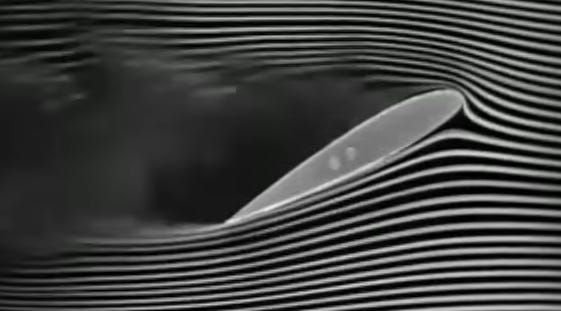
During times of uncertainty and change, we might feel like air particles folding around a wing that has arrived unexpectedly in our space. We might feel more separated than together. Some of us are racing above, while others slugging it out below. But — unless we decide to spin out of control — we know that in time, we will meet together on the other side and continue moving forward.
So, how do we keep from spiraling out of control when facing the unexpected? Like a pilot navigating unstable or unexpected conditions, we should avoid overcorrecting for the situation. We must resist the temptation to let fear and panic dictate our direction. Instead, we should recall the lessons we have learned from those who have faced similar situations and trust their guidance and wisdom. And perhaps most importantly, if we want to avoid stalling, we must remember that others need us as much as we need them. No airfoil can generate lift in isolation. Likewise, we can never stay aloft in this world without having the courage to face the next moment confidently and expectantly—together.
We hope you will join us for our NEW podcast, The Trail: Encounters. In Episode 4, we discuss the real motivation behind the Tower of Babel and temptation to experience God on our terms.
To receive our latest posts right to your inbox, please subscribe below: